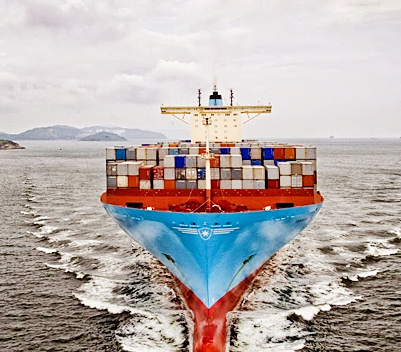
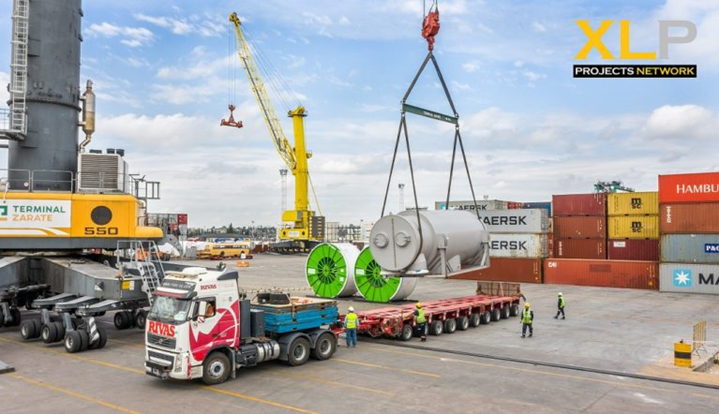
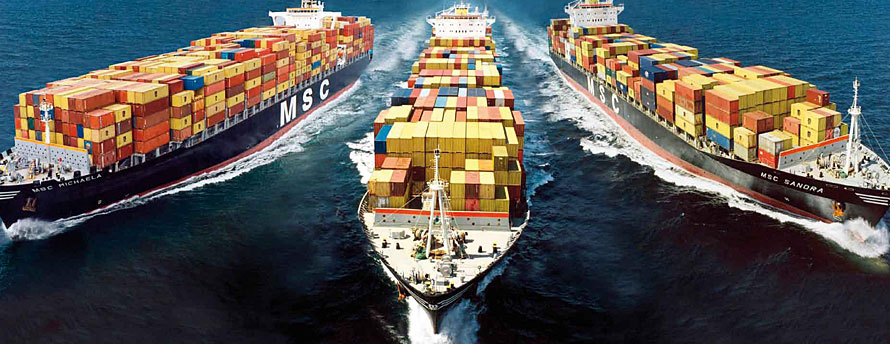
Ocean shipping containers are large standardized shipping containers, designed and built for freight transport via ocean. They vary in size, style,
and function. The sizes are listed in feet.
Their internal or door opening dimensions are generally standard, but often slightly change depending on the carrier. While small, these differences
can have an impact on shipments.
Most containers are made of steel with corrugated sides and their floors are made of treated wood so cargo can be blocked and braced with lumber and nails.
When the weight of your cargo is too concentrated or heavier than normal loads, it can break the bottom of the container, so you must make sure you are
distributing the weight of your cargo correctly and get appropriate accommodation for your heavy loads.
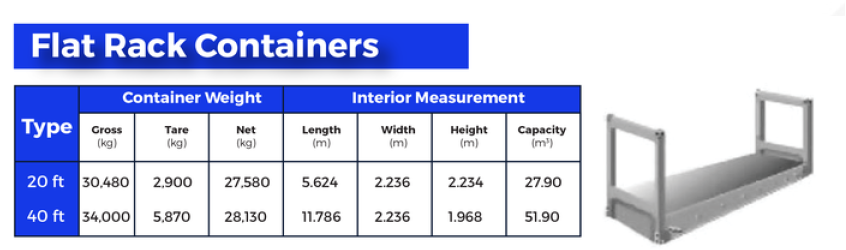
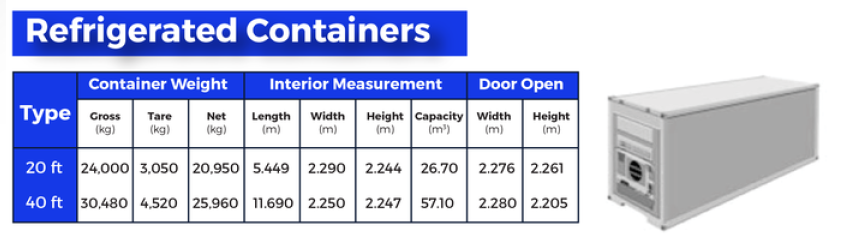
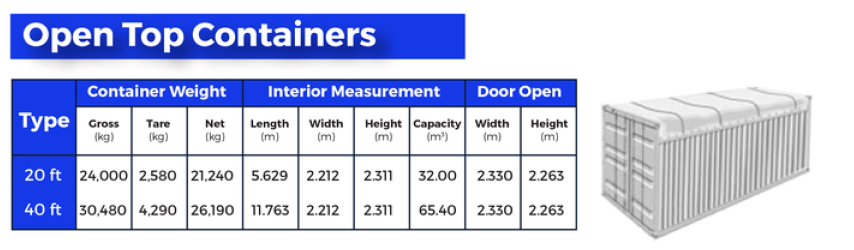
There are many types of ocean shipping containers used to accommodate the different needs of your cargo. Here are some examples:
Container Sizes
When exporting product around the world there are different shipping methods to consider. It mainly depends on the overall product packing sizes,
cubic measurement, or total weight of the products to be shipped.
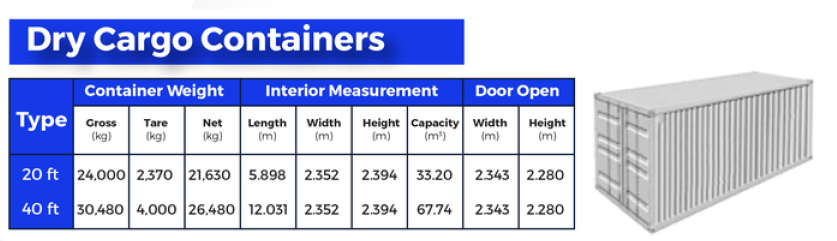
20'GP Shipping Container (General Purpose)
The 20’ container is the most cost-efficient way to transport the goods to your buyer. It is known as a ‘Twenty-
Footer’ to signify the overall length of 20 feet. Products are usually packed inside cartons, then cartons stacked
and wrapped onto pallets and loaded inside the container for transport. A popular way of exporting palletized
cargo is 2 pallets high, 2 pallets wide, 8 pallets deep – 16 pallets total.
40'GP Shipping Container (General Purpose)
The 40’ shipping container is the same design as the 20’ container but just double the length. So the overall length is 40 feet and can hold double
the amount of cargo.
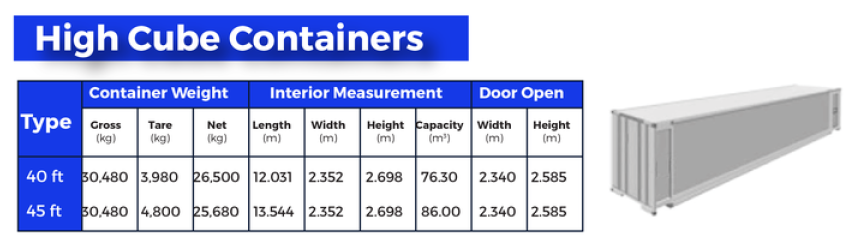
40'HC Shipping Container (High-Cube)
The 40’ High Cube shipping container is the same overall length as the 40’GP but it is approximately 40cm taller than the GP. This slight increase in
height allows for an extra 10-15% of cargo to be loaded inside. It also allows for some different packing methods which can fit extra cargo otherwise unable to load inside a normal 40’GP container.
LCL Cargo (Less Than Container Load)
LCL shipping is a shipping method used for smaller cargo when the overall size of the goods for export is not big enough to fill a 20’ container. When
LCL shipping is used, the goods are still loaded inside a 20’ shipping container and transported the exact same way but the goods are loaded inside a
shared shipping container along with other
party’s cargo to fill the container (a consolidated container). The freight cost is charged out depending on the overall product size or weight, the shipping
rate will be charged out per cubic meter of cargo (m3) or per Metric Tone (1,000kg) in weight, whichever is greater. There are more handling costs involved when
shipping LCL cargo as pallets
have to be loaded and unloaded more often, incurring more handling charges.


 Roll On-Roll Off Service (RORO).